City of Franklin Tax Moratorium
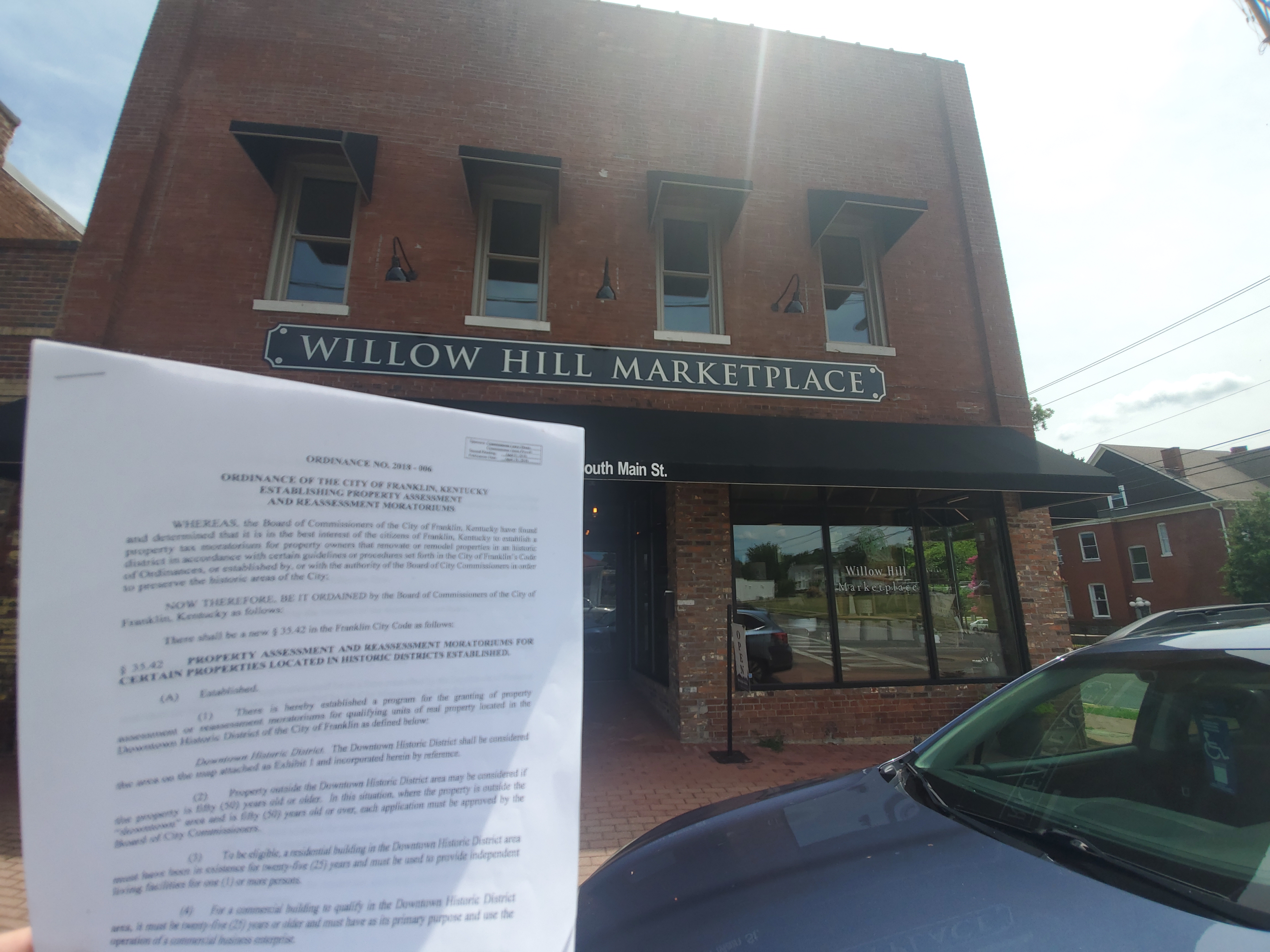
In Franklin, Kentucky the City Commission passed a Downtown Tax Moratorium to give downtown property owners an extra incentive to renovate their buildings. Renovating these buildings not only helped bring Franklin’s downtown back to life, but also increases the value of the property for the owner. According to Tammie Carey, The Community Services Director,“(if) someone purchased a building in the Downtown Historic District for $100,000 and made renovations that increased the value of the property, the owner could apply for a tax moratorium so they continue to pay property taxes at the pre-renovated assessment value.”
A property owner that wants to renovate their property needs to fill out an application that Carey takes before the city commission to be approved (as of this writing no application has been denied yet). After approval from the city commission, Carey sends a letter to the property owner informing them that the tax assessment on the property will remain at its current value for the next five years.
Passing the moratorium
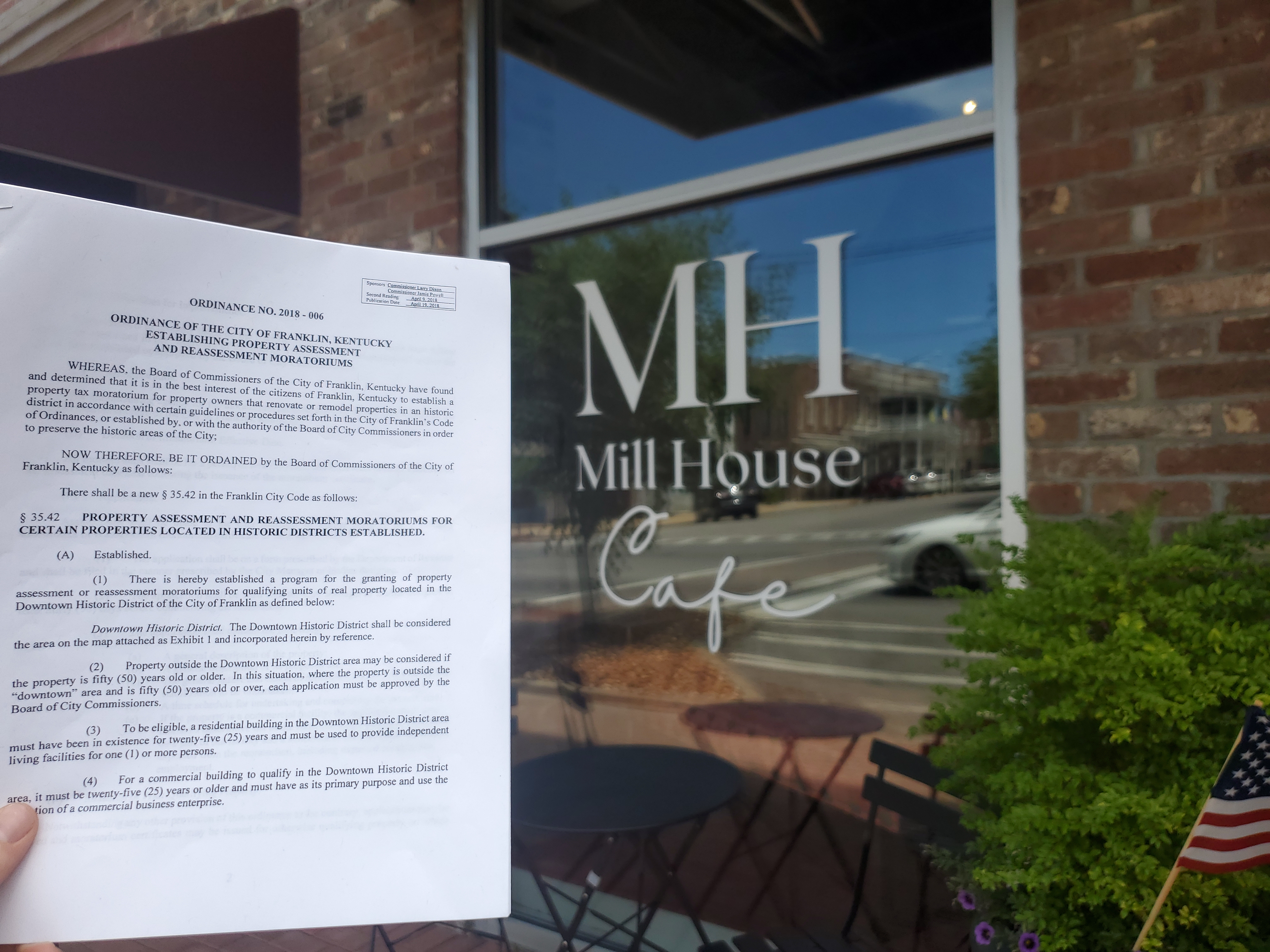
In 2018, before the passing of Tax Moratorium, the City of Franklin passed a Historic Preservation Ordinance to address a gap in their planning and zoning regulations for downtown properties. As Carey points out, “if an owner of a building on our downtown historic square decided to tear that building down, we had nothing in place to stop them. What would that do if you took a prime building out of main street, you are left with a gap in the center of all these buildings, what would that do to the aesthetics of our community?” After the city government decided that zoning needed to change in downtown Franklin, Carey got to work on the Tax Moratorium as a way to offer incentives for owners to not just leave buildings vacant, but to instead invest in them and in-turn, invest in downtown. The new tax moratorium would ‘lock-in’ property tax rates for five years to allow for owners to make renovations without incurring a massive property tax jump right away. After five-years, the moratorium on the specific property sunsets, and rates return to normal.
Carey worked with the tax collector, the city attorney, the city manager, and the mayor in order to navigate the legality of the moratorium.
Speaking of the legal process, Carey states, “working with the City Attorney is a big help. We are apart of the KY League of Cities (KLC). Our city attorney is actually on the board of directors so he was able to look at the work of other city attorney’s across the state and any time hes got questions or if we are looking at something new he will put that out there. he can ask people who have experience.” Further, working with the local tax collector ensures that after the moratorium passed the paperwork can be managed. On the collaboration Carey said “It’s great to pass ordinances and law but if you don’t have the staff that can really see that those policies and paths are being followed it doesn’t do you any good. If we didn’t have a great tax collector who tracked everything, and we didn’t track through the community development office, the property owners that are under that moratorium who worked with the tax collector, it would all fall apart.”
How the Moratorium Process Works
To take advantage of the Moratorium, a business owner needs to fill out an application form with the City of Franklin. From there, the application is presented to the City Commission for approval and a letter is sent to the property owner indicating the application’s status. Once approved, the City of Franklin works with the business owner, property evaluator, and local tax collector to lock the tax rates in for the five-year moratorium period. A sample of the City’s application, moratorium documentation, and other resources is linked below for reference. Speaking of the program’s use to-date, Carey stated, “We still have some buildings that need substantial amount of work, but I feel like we are on the right path and overtime we’ll get to where we need to be. There aren’t making anymore land, I love the song “buy dirt”. I love that, same for anything, we can’t expand our square, its a square, the buildings around the square we need to take care of, we need to value those, preserve them for the future so that Franklin stays Franklin.”
Implementing a Similar Idea in your Own Community
After being asked what advice she would give to others wanting to pursue something similar, Carey stressed the importance of collaboration. The City Commission in Franklin was extremely supportive of the Moratorium, but the support of property owners is extremely important. “You want them on board, you want them to see the advantages to doing renovations to their property.”
Recently, Simpson County passed a similar tax moratorium that applies to county taxes. The area covered by the county is more than downtown Franklin, therefore more property owners can take advantage.
Related Resources
Looking for more information on how you can duplicate this success in your own community? Check out the resources below!